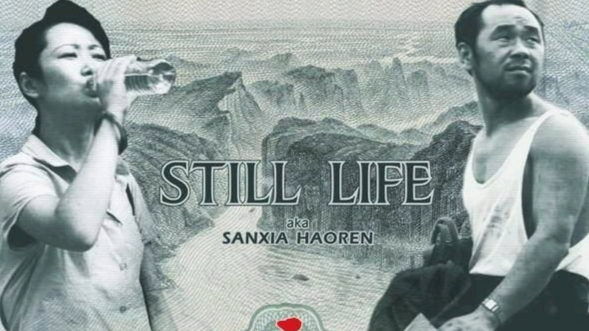
Still Life (Film)
Introduction
Still Life is a film directed by the renowned Chinese filmmaker Jia Zhangke, known for his profound storytelling that often reflects the socio-economic changes in China. Released in 2006, this film was awarded the prestigious Golden Lion at the Venice International Film Festival. The movie is set against the backdrop of the construction of the Three Gorges Dam on the Yangtze River, which is one of the most significant socio-environmental events in contemporary China. The film portrays the lives of ordinary people affected by the massive infrastructural project, blending personal stories with broader socio-political themes.
Background and Setting
The narrative of Still Life takes place in Fengjie, a city partially submerged due to the Three Gorges Dam project. This setting plays a central role in the film, symbolizing the transformation and sacrifices involved in China's rapid modernization. The film juxtaposes personal dramas with the monumental scale of the dam, highlighting the intersection between individual lives and national progress.
Plot and Themes
Still Life follows the journeys of two protagonists, Han Sanming and Shen Hong, who travel to Fengjie for personal reasons. Han Sanming, a miner from Shanxi province, is searching for his ex-wife, while Shen Hong seeks her estranged husband. Their quests unfold separately but intersect with the lives of the displaced residents, capturing the human cost of economic development. The film delves into themes such as the impermanence of life, the resilience of the human spirit, and the emotional dislocation resulting from forced migration.
Artistic Style
Jia Zhangke is known for his distinctive cinematic style, which blends documentary realism with narrative fiction. In Still Life,"he employs long takes, minimal dialogue, and naturalistic performances to create a contemplative atmosphere. The director's use of non-professional actors and on-location shooting further enhances the authenticity of the film. The visual storytelling is complemented by a subtle use of color and light, reflecting the muted tones of the landscape and the somber mood of the narrative.
Reception and Impact
Still Life received international acclaim for its poignant storytelling and evocative portrayal of contemporary Chinese society. The film's success at the Venice Film Festival brought Jia Zhangke further recognition as a leading voice in world cinema. Critics praised the film for its insightful exploration of the human condition amidst China's rapid transformation. It also sparked discussions about the social and environmental implications of large-scale development projects, highlighting the need for a balance between progress and preservation.
Cultural and Social Context
The film is embedded in the cultural context of early 21st-century China, a period marked by significant economic growth and urbanization. The Three Gorges Dam, as depicted in the film, is a testament to China's engineering prowess but also a symbol of the disruptions caused by such developments. Still Life offers a window into the lives of those who are often overlooked in the grand narrative of progress, emphasizing the enduring impact of cultural displacement and loss of heritage.
Influence and Legacy
Still Life has influenced a new generation of filmmakers interested in exploring the nuances of life in modern China. Jia Zhangke's work is noted for its ability to capture the zeitgeist of a rapidly changing society, and this film is no exception. It has contributed to the global understanding of Chinese cinema as a medium for critical reflection on societal issues. The film's legacy continues to inspire discussions on the ethical considerations of development and the representation of marginalized communities in art








